
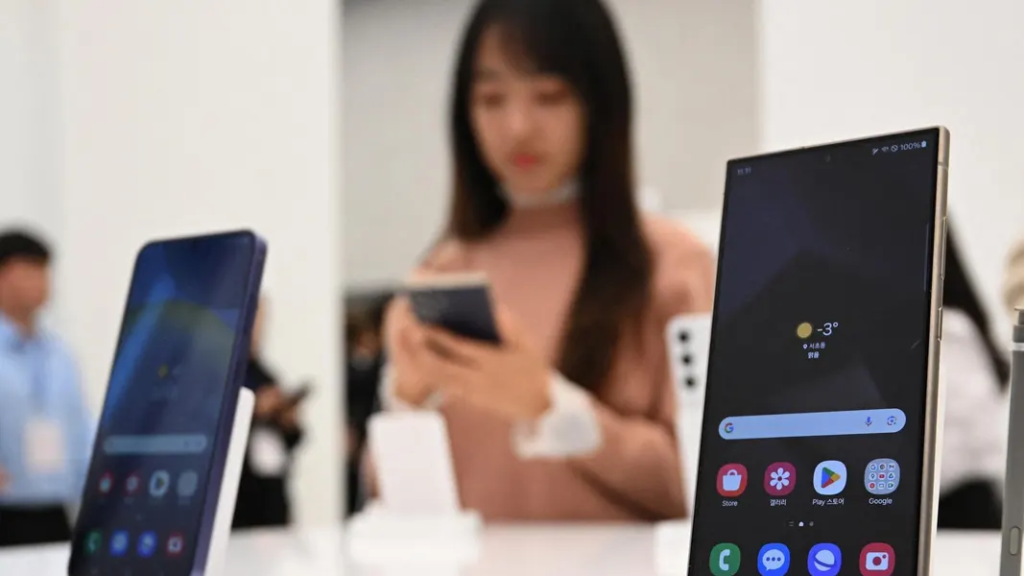
Every year, Samsung’s Galaxy Unpacked event feels like a numbers game — more megapixels, brighter displays, faster processors. Bigger specs. Louder comparisons. But with the upcoming launch of the Galaxy S26 Ultra, alongside the S26 and S26+, Samsung appears ready to change the conversation entirely.
This time, it’s not about winning a spec battle. It’s about redefining what a smartphone should actually mean in our daily lives.
A Shift From Flashy Specs to Functional Purpose
For years, flagship phones competed like trading cards — highest camera resolution, peak brightness, fastest chip. But the returns from this approach are shrinking. Most users don’t feel dramatic differences year after year anymore.
With the Galaxy S26 lineup, Samsung seems to be stepping back from the “spec war” mindset and focusing on something deeper: long-term usability, privacy, and meaningful innovation.
Instead of chasing extremes, Samsung is building stability — a flagship designed to age well, perform consistently, and support users for years.
A New Design Philosophy: Professional Meets Everyday
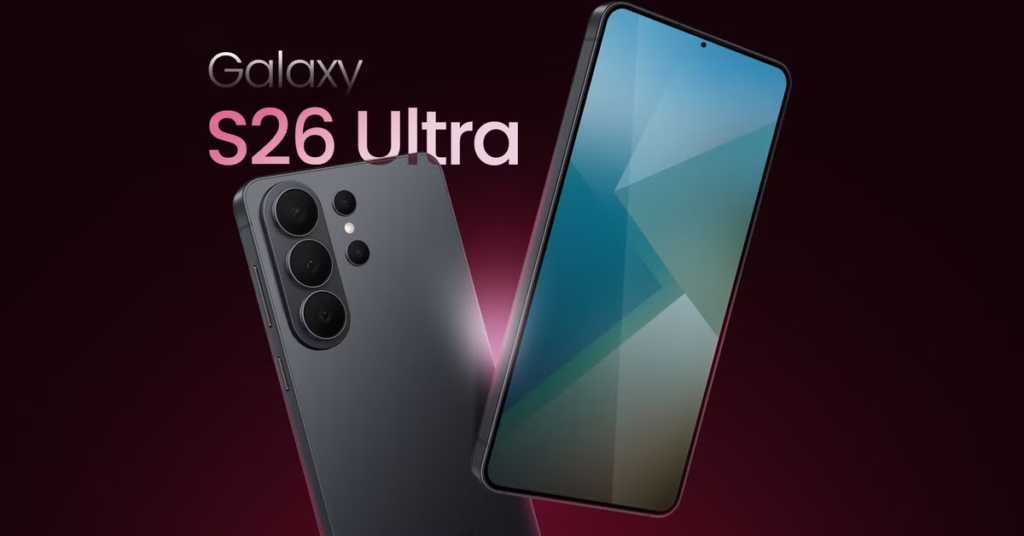
The Galaxy S26 Ultra is expected to move away from the sharp, boxy design inherited from the old Note series. In its place comes a more unified look across the entire S26 family.
The message is clear:
There’s no longer a strict divide between “business phone” and “consumer phone.”
All three models are being positioned as productivity-ready daily drivers. Whether you choose the base model or the Ultra, the experience is cohesive and premium.
Interestingly, Samsung also appears less focused on ultra-thin designs this year. After reports of weaker demand for ultra-slim variants, the company seems to be prioritizing durability, optical performance, and display quality over fashion trends.
Form is winning over flash.
The Privacy Screen: A Simple Idea With Big Impact
One of the most talked-about features could be Samsung’s new privacy display filter. It limits screen visibility so only someone looking directly at the phone can see the content clearly.
Unlike background privacy features such as encrypted backups or rotating Wi-Fi identifiers — which users rarely notice — this is something instantly understandable. You see it working in real time.
And that matters.
Privacy is no longer a hidden checkbox feature. Samsung is turning it into something visible, tangible, and marketable.
The Evolution of AI: From Generative to Intelligent Assistance
Samsung’s Galaxy AI has already become one of the most visible AI systems in the Android ecosystem. With Samsung’s global reach, its AI strategy doesn’t just impact its own users — it influences the entire industry.
But the shift now appears to be moving beyond basic generative tools.
Instead of AI that only edits photos or rewrites text, the next step is more contextual, assistant-driven intelligence. Tools like Samsung’s Now Brief and Now Bar hint at a future where your phone proactively gathers relevant information across apps and presents it intelligently — without constant app switching.
The goal?
Reduce friction.
Reduce taps.
Reduce mental load.
That’s a major philosophical change in how smartphones operate.
More AI Processing, Less Cloud Dependence
Another key area of transformation is where AI runs.
With powerful new chipsets expected in the S26 series, Samsung can push more AI tasks directly onto the device instead of relying on the cloud. That means:
- Faster responses
- Less dependency on constant internet connections
- Stronger data privacy
Combined with Samsung’s built-in security architecture, this creates a stronger trust ecosystem. And trust is becoming one of the most valuable currencies in tech.
Playing Defense — And Going on Offense
Competition is intense. Apple’s iPhone 17 Pro, Google’s Pixel 10 Pro, and aggressive Android brands are all raising the bar.
Instead of reacting impulsively, Samsung appears to be playing strategically. By maintaining the Ultra as the brand anchor — even amid rising component costs — Samsung keeps the flagship as the central value proposition.
At the same time, long-term software support (up to seven years) changes how buyers think about price. A phone is no longer a two-year device. It becomes a long-term investment.
Even slower charging speeds — often criticized in comparison charts — may be part of a durability-first strategy aimed at preserving battery health over years of usage.
Short-term comparison losses.
Long-term ownership wins.
A Smartphone Designed for the Next Decade
The Galaxy S26 Ultra may not shock the market with dramatic jumps in numbers. It may not scream revolution.
But that might be exactly the point.
Instead of chasing hype cycles, Samsung seems to be building a foundation — one centered around privacy, smarter AI, longevity, and cohesive design.
If that vision succeeds, the Galaxy S26 Ultra won’t just be another flagship launch. It could mark the moment smartphones stopped competing on raw specs and started competing on meaningful experience.
And that’s how you change the industry — not by shouting louder, but by thinking longer.
FAQs
#GalaxyS26Ultra #SamsungUnpacked #NextGenSmartphone #Carrerbook #Anslation #MobileInnovation #SmartphoneRevolution #GalaxyAI #PrivacyTech #AndroidFlagship